



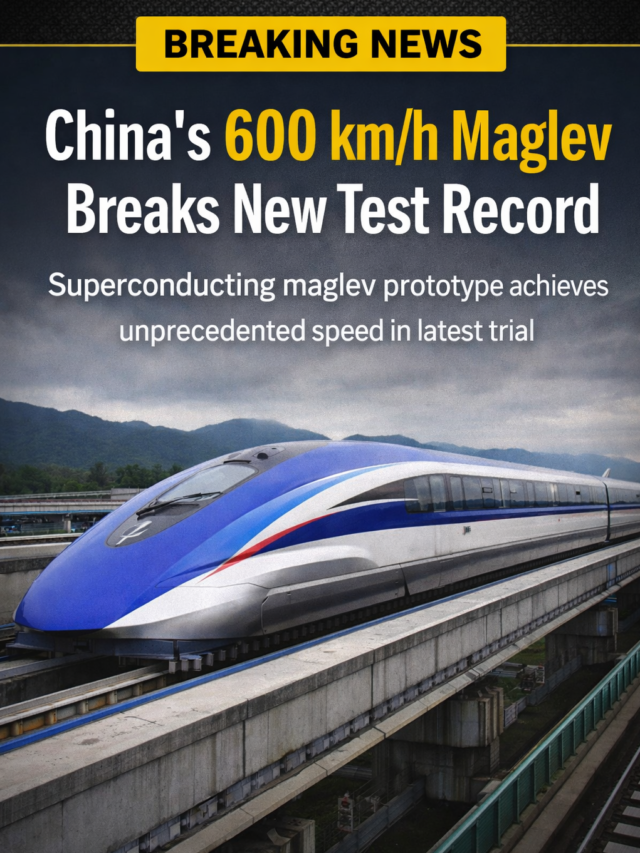


China maglev tests in late 2025 and early 2026 stunned the world as superconducting trains accelerated beyond 600 km/h in just two seconds, setting extraordinary new benchmarks in high-speed transport technology. Widely hailed as a historic magnetic levitation breakthrough, these tests demonstrated a dramatic leap in superconducting rail innovation and ultra-fast ground mobility. From redefining intercity connectivity to pushing the limits of engineering precision, this achievement is being viewed as one of the most significant milestones in modern railway history.
This article explores the science behind the breakthrough, the record-setting speeds, the global implications for transportation systems, and why experts believe this moment could redefine the future of transit.
What Is Magnetic Levitation and Why Does It Matters
Magnetic levitation, commonly called maglev, represents a radically different approach to train travel. Instead of traditional wheels rolling on tracks, superconducting trains levitate above a guideway using powerful magnetic fields. This eliminates physical friction and allows trains to accelerate with breathtaking smoothness and efficiency.
The principle is straightforward but technologically demanding:
- Electromagnets or superconducting magnets generate forces that lift and propel the train.
- With no contact with the track, wear and energy loss are dramatically reduced.
- Propulsion comes from controlled magnetic fields shifting along the guideway.
Because of these features, maglev trains have long been seen as the future of high-speed travel, fast, efficient, quiet, and potentially cheaper to operate at extreme speeds than traditional high-speed steel-wheel trains. But until recently, achieving ultra-high speeds consistently and safely on real-world test tracks remained elusive.
China Sets New Records in Maglev Speed and Acceleration
In late December 2025, Chinese researchers from the National University of Defense Technology (NUDT) achieved a world-breaking milestone: a superconducting maglev test vehicle hit 700 km/h in just two seconds on a 400-meter experimental track.
This wasn’t merely fast; it represented a breakthrough in maglev acceleration and control systems. Achieving ultra-rapid speed increases in such a short distance requires extreme precision across propulsion, suspension, power storage, and superconducting magnets.
Key points from the breakthrough include:
- Speed: 700 km/h (435 mph) achieved in roughly 2 seconds.
- Superconducting Technology: The train floats above the track with magnets that produce powerful electromagnetic fields.
- Control & Safety: The vehicle was brought safely to a complete stop after reaching its peak, showcasing both acceleration and deceleration control.
While this was a prototype run, not yet a full passenger service, experts call it the most significant maglev development to date.
From 600 km/h to Beyond – China’s Maglev Journey
China’s maglev progress didn’t start overnight. In recent years, different tests have revealed rapid progress:
🔹 Early Milestones:
In mid-2025, teams reported test runs reaching 650 km/h in 7 seconds on longer tracks using advanced electromagnetic propulsion systems.
🔹 600 km/h Maglev Prototypes:
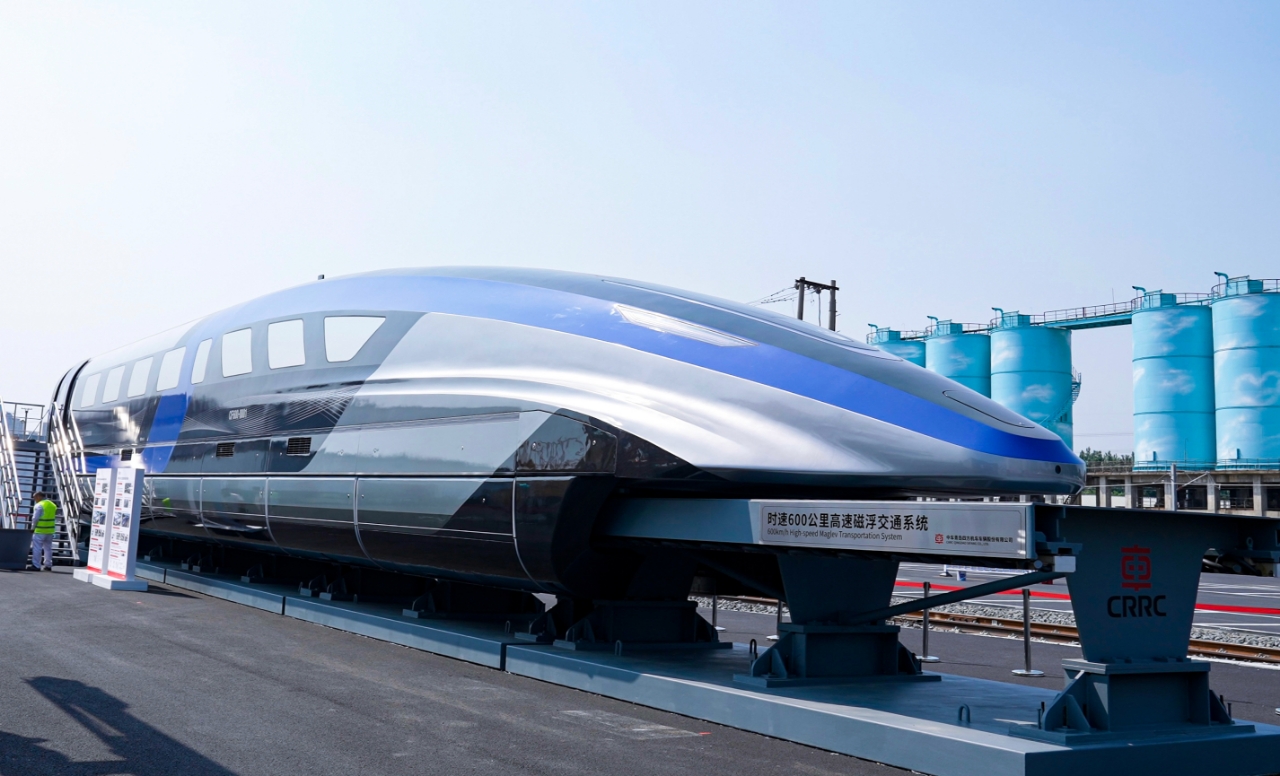
CRRC, China’s major rolling stock manufacturer, unveiled a 600 km/h maglev prototype, based on superconducting electrodynamic suspension technology.
This train’s design, optimized for high speeds with lightweight construction and magnetic levitation, hints at future passenger services capable of outperforming many modern aircraft on specific routes.
While the world record 700 km/h test is arguably the headline achievement, the consistent evolution through stages like the 600 km/h prototype builds confidence that China’s maglev systems will soon become commercially viable.
How Superconducting Maglev Technology Works
Superconducting maglev trains employ magnets cooled to very low temperatures close to absolute zero, allowing zero electrical resistance and an immense magnetic force. The key benefits include:
- Frictionless Movement: Reducing energy loss and enabling smoother rides.
- Rapid Acceleration: Magnetic forces can be precisely controlled to achieve extreme acceleration, like 0 to 700 km/h in mere seconds.
- Stability at High Speeds: Superconducting systems are more stable than earlier maglev tech, minimizing the risk of derailment at high velocities.
These trains do not rely on wheels or physical tracks in the traditional sense. Instead, onboard magnets interact with coils or magnetic guideways embedded in the track, lifting the train and propelling it forward by altering magnetic fields.
In simpler terms, the train “floats” and moves using carefully controlled magnetic forces, rather than mechanical contact.
What This Means for High-Speed Transport Technology
China’s recent breakthroughs have implications far beyond national pride. Transportation experts are suggesting several major impacts:
1. A New Era for Intercity Travel
If maglev trains can be scaled to operational service, they could rival short-haul flights on journeys of 500–1500 km. Seats could potentially travel around 600–700 km/h, meaning routes like Beijing to Shanghai could be significantly shortened compared to traditional rail.
2. Energy Efficiency and Sustainability
Maglev systems emit no direct pollution and, by reducing friction, offer higher energy efficiency per kilometer than most conventional trains. Unlike jets, they don’t require massive amounts of fuel for lift, making them greener for medium-distance travel.
3. Broader Tech Applications
Superconducting magnetic levitation isn’t limited to trains: researchers see applications in vacuum tube travel (like hyperloop concepts), electromagnetic launch systems for spacecraft, and even high-speed ground testing for aviation tech.
4. Global Competition and Innovation
China’s successes fuel competition with nations like Japan (home to the famous JR maglev tests) and Germany. This could accelerate global advancements in high-speed transport technology.
Challenges on the Road to Commercialization
Despite remarkable achievements, several challenges remain:
High Infrastructure Costs
Maglev track infrastructure is expensive compared to standard rail due to the specialized guideways required.
Energy Requirements
Superconducting maglev systems rely on powerful magnets and cooling systems that need significant electricity and infrastructure to maintain.
Scaling From Prototype to Passenger Service
Testing a small prototype is different from full-length passenger trains operating on real routes both in safety demands and engineering complexity.
However, overcoming these challenges is a major focus for Chinese planners and engineers, who see ultra-high-speed maglev as a cornerstone of future infrastructure.
Global Context – How China Compares
China isn’t the only country pursuing maglev tech:
- Japan’s JR Central has achieved maglev speeds over 600 km/h in test environments.
- Germany developed early maglev systems and continues research in Europe.
But China’s recent rapid acceleration and speed achievements, especially the 700 km/h record, position it at the forefront of superconducting maglev technology development.
What’s Next for Maglev and High-Speed Transit
Experts forecast several future developments:
Commercial Lines
Future maglev corridors could link major cities, offering short-to-medium-distance alternatives to air travel.
Integration with Urban Transit
Maglev could eventually merge with urban high-speed commuter systems, boosting efficiency and capacity.
Hyperloop-Style Systems
In the longer term, vacuum tube transport could push speeds beyond 1,000 km/h, bringing cities closer together than ever.
Each step requires not just engineering breakthroughs, but political will, investment, and robust safety validation.
Conclusion – A New Transport Frontier
China’s recent maglev tests with superconducting trains surpassing 600 km/h in just seconds and world-record achievements close to 7the 00 km/h mark a transformative moment in high-speed transport technology. What once existed only in futuristic speculation is now becoming tangible, tested, and documented.
From energy efficiency to emissions reduction and reshaping how people travel between cities, the age of ultra-fast ground vehicles is fast approaching. While commercialization still faces hurdles, China’s breakthroughs signal that maglev is no longer just theoretical; it’s on the runway to reality.
Source: Indian Tech & Infra via X (IndianTechGuide status) and global reports on maglev developments.
Stay connected with newsnarada.in – Messenger of Truth.