
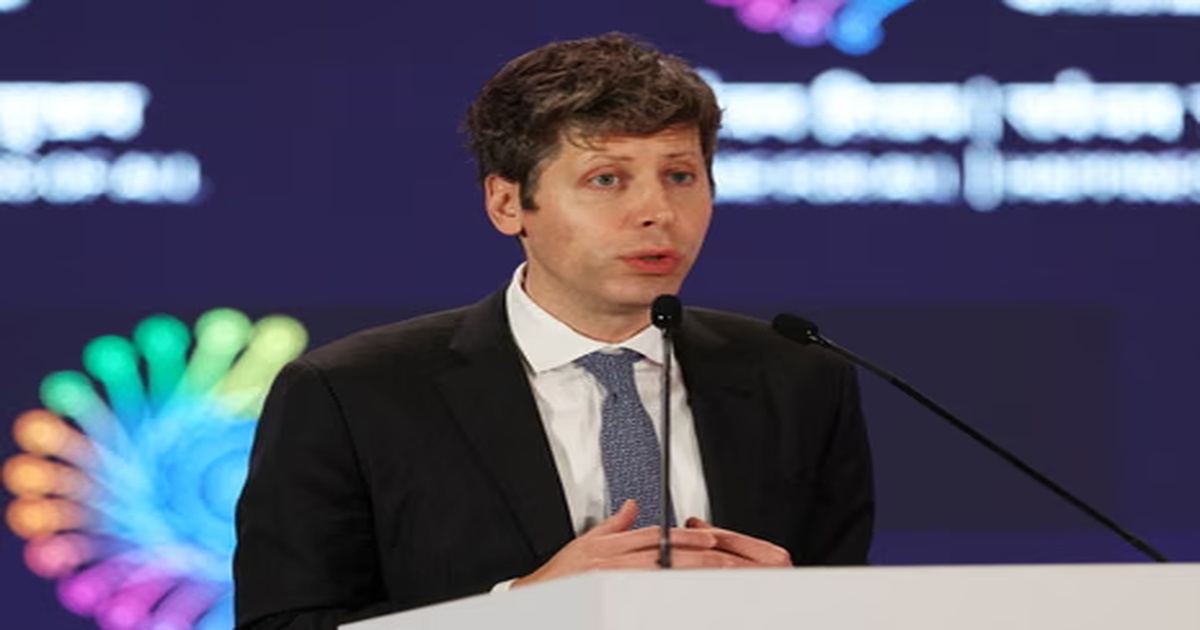
Recent OpenAI CEO Sam Altman comments about the energy and resource consumption of artificial intelligence systems have stirred intense discussions across social media, tech communities, and industry forums this week. At the India AI Impact Summit in February 2026, Altman addressed concerns about AI’s environmental footprint in a way that many saw as controversial, prompting both support and sharp criticism online.
His remarks touched on topics ranging from AI energy efficiency to comparisons between the resources required to train humans and those needed to run large AI models, sparking debates that reflect growing global concern about the sustainability of advanced technology.
In this article, we’ll explore why OpenAI CEO Sam Altman comments have attracted so much attention in 2026, what he actually said, and how industry experts and the public have reacted to his stance.
What Exactly Did Sam Altman Say?
At the India AI Impact Summit, Altman was asked about claims circulating online that AI models like ChatGPT use enormous amounts of energy and water for each query. In response, he argued that many of these claims have been exaggerated or mischaracterized.
Altman noted that modern AI data centers no longer use water-intensive evaporative cooling systems, and dismissed reports suggesting that each ChatGPT query consumes 17 gallons of water as “totally fake” and without basis in reality.
In a provocative comparison, he also stated that training a human being consumes a significant amount of energy over a lifetime, approximately 20 years of life and all the food consumed during that period before a person becomes fully capable of answering questions or performing complex tasks.
According to Altman, this comparison shows that AI may already be energy-efficient on an individual inference basis the amount of power used to answer a question after a model is trained even though the total resource footprint of AI is climbing as adoption grows.
The Context Behind the Comments
The backdrop for these OpenAI CEO Sam Altman comments was a broader discussion about AI’s environmental impact, particularly concerning energy consumption in data centers that train and host large language models.
Critics and environmental groups have raised alarms about the rapid expansion of data centers and the associated electricity and water usage required to power and cool large-scale AI infrastructure. These facilities are becoming ubiquitous, and many governments and organizations are urging more transparent reporting and sustainable practices.
Altman’s defense was grounded in the argument that public debate should consider broader context, including the energy and resources humans use over lifetimes, as well as the ongoing shift toward using renewable energy sources such as nuclear, wind, and solar to power AI infrastructure.
Why the Comments Sparked Backlash
Despite Altman’s attempt to reframe the narrative, many on social media and in industry circles perceived his remarks as dismissive of legitimate environmental concerns. Critics felt the comparisons between AI and human resource use were tone-deaf or misleading, arguing that technological resource consumption is a pressing issue that warrants detailed analysis and accountability.
Several users on platforms like X (formerly Twitter) and Reddit responded sharply, saying that centering the conversation around abstract comparisons to human training costs detracted from real environmental impacts like electricity demand and localized water shortages around data center clusters.
Environmental advocates have also pointed out that while per-query energy usage may decrease, the overall footprint of AI systems increases as adoption grows, demanding urgent attention to sustainable design and infrastructure planning.
Industry Perspectives on AI Resource Use
Experts in technology and sustainability have weighed in on the debate stirred by the OpenAI CEO Sam Altman comments, highlighting nuances that go beyond simplistic comparisons.
Some analysts agree that measuring AI’s environmental impact requires a comprehensive lifecycle assessment, including both training and inference phases, as well as the indirect energy costs of data center operations and hardware manufacturing. Others stress that energy use per AI query should not be the sole metric instead, total resource consumption across billions of queries must be factored in.
A number of researchers have also encouraged greater transparency from major AI developers, suggesting that companies proactively publish energy and water usage data for their models to provide stakeholders with a clearer picture of environmental costs.
At the same time, proponents of AI efficiency argue that as models improve and infrastructure evolves toward cleaner energy sources, the overall environmental impact could shrink relative to the productivity benefits AI delivers across sectors.
The Debate on AI and Environmental Sustainability
The controversy around Altman’s remarks highlights a larger ongoing conversation about the environmental sustainability of artificial intelligence technologies.
AI’s resource demands are multifaceted:
-
Electricity usage for training and running models
-
Cooling and water requirements in data centers
-
Hardware manufacturing costs
-
**Energy costs of AI adoption across industries
Altman’s stance that humans also consume vast quantities of energy and resources was intended to broaden this conversation, but it also exposed divisions in how experts, policymakers, and the public think about technological sustainability in the 21st century.
The Role of AI in a Resource-Constrained World
One key takeaway from the debate is that AI cannot be divorced from discussions about energy policy and sustainability. Many leaders in the technology sector believe that the growth of AI must be matched with investment in cleaner energy solutions to avoid exacerbating climate change and resource depletion.
Altman echoed this sentiment by emphasizing the need for nuclear, wind, and solar energy to power the next generation of computing infrastructure, even as he disputed certain claims about AI’s environmental footprint.
This perspective suggests that the future of AI will increasingly intersect with global energy agendas and the push for renewable sources capable of meeting the power demands of advanced computing systems.
Public Perception and Online Reactions
The OpenAI CEO Sam Altman comments did not just stay in conference rooms they quickly spread across social platforms, leading to a wave of discussion and debate.
Some commentators praised Altman for challenging what they saw as exaggerated claims and misinformation. They argue that misinterpretations about energy usage could distract from productive discussions about real sustainability solutions.
Others, however, criticized the tone and framing of his comparisons, suggesting that equating human biological development with AI computing energy costs oversimplified complex environmental issues.
On forums like Reddit, many users expressed frustration that the conversation focused too heavily on abstract analogies rather than concrete data on AI’s total environmental impact.
What This Means for AI’s Future
The reaction to the OpenAI CEO Sam Altman comments underscores how deeply intertwined AI is with broader societal concerns, including environmental sustainability, energy policy, and public trust in technology leadership.
As AI systems grow more powerful and integrated into everyday life, questions about their energy footprint and long-term ecological impact will only become more prominent. How companies like OpenAI address these concerns through transparency, innovation, and sustainable infrastructure investment could shape public perception and regulatory responses in the years ahead.
A balanced approach that acknowledges both the benefits and environmental challenges of AI may be necessary to build trust and ensure that this rapidly evolving technology develops responsibly.
Conclusion
Sam Altman’s remarks at the India AI Impact Summit comparing AI’s energy usage with human resource consumption and dismissing certain claims about water usage have sparked a broad and sometimes heated global debate. While some view his comments as a necessary corrective against misinformation, others see them as minimizing real environmental concerns.
What is clear is that the OpenAI CEO Sam Altman comments have brought important questions about AI’s sustainability to the forefront. As the world grapples with the rapid expansion of artificial intelligence, balancing innovation with environmental responsibility will remain a critical challenge.
Source: Information in this article is taken from reporting by The Indian Express about comments made by Sam Altman on AI energy and resource usage.
Stay connected with newsnarada.in – Messenger of Truth.