
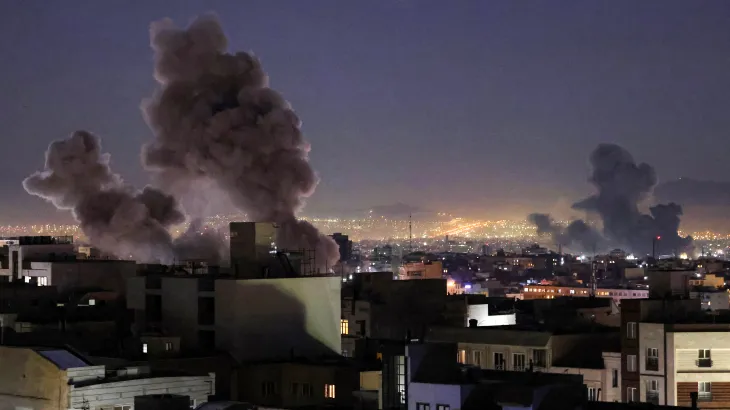
Global headlines have been dominated by recent explosions in Iran, following a preemptive military strike by Israel, supported by the United States, early on 28 February 2026. The attacks sent shockwaves through Tehran and across the Middle East, with explosions reported in the capital, emergency alarms sounding, and widespread panic gripping the city. Authorities declared a state of emergency as tensions between Tehran and Jerusalem reached unprecedented levels.
This article brings you a comprehensive look at the evolving situation including the scale of the attack, civilian reactions, geopolitical responses, and the potential implications for regional stability. The Iran explosion news reflects a dramatic escalation in the persistent Iran-Israel conflict, raising major concerns about the risk of further military exchange and broader geopolitical repercussions.
What Happened: Explosions Rock Tehran and Other Cities
Earlier on Saturday, powerful blasts rang out across Tehran after Israel announced that it had launched what it described as a “preemptive strike” against Iranian military and strategic targets. According to local Iranian media and independent reports, multiple explosions occurred in central districts of Tehran and were visible as plumes of smoke rose over the city skyline.
Iranian authorities have confirmed that several explosive impacts were heard in different sectors of the capital, with reports of explosions in Tehran, Isfahan and Tabriz. These blasts triggered immediate alarms and civil defense procedures across the country, contributing to confusion and distress among residents.
Across Iran’s major cities, including its capital, people fled busy streets and sought shelter as the explosions unfolded part of what is now being widely reported as a significant escalation in the Iran-Israel conflict.
Israel Declares State of Emergency After Strikes
In response to the unfolding conflict, Israel’s Defense Minister Israel Katz announced that the nation had carried out a preemptive military strike on multiple Iranian sites and declared a nationwide state of emergency. This move was aimed at preparing Israeli civilians for possible retaliatory actions from Iran and reinforcing internal security protocols.
Officials in Israel have emphasized that air raid sirens and protective alert systems were activated to warn the public of potential missile threats, including possible counterraids from Iranian forces. Israeli authorities have also urged citizens to stay informed through official defense channels as the situation remains volatile.
Domestic Reaction in Iran: Panic, Retreat, and Public Anxiety
The immediate aftermath of the Iran explosion news spurred mass anxiety among residents in Tehran and other affected regions. Long lines formed at gas stations as citizens attempted to flee urban centres, fearful of continued conflict escalation. With schools and universities temporarily closed and many civilians seeking safe zones, the psychological impact of such a high-profile attack cannot be understated.
Iran’s Foreign Ministry has denounced the attack as a blatant act of aggression, insisting that the nation will respond decisively and defend its sovereignty against external military pressure. State officials labeled the strikes as unjustified and emphasized Iran’s right to retaliate against what it termed a violation of international norms.
Iran Retaliation Threats and Military Response
Following the explosion reports and emergency declarations, Iranian military leaders vowed a tough response, promising that the nation’s retaliation would be “crushing” if its territorial integrity and national security continued to be threatened. Iranian officials hinted strongly that they would leverage all available military resources to counter any foreign strikes.
Speculation about missile launches and drone operations from Iranian bases toward Israel also circulated on regional news channels, reinforcing fears of an expanding military exchange. While official confirmation remains limited, analysts believe that Iran may adopt a combination of defensive and offensive strategies in the coming hours.
Why the Attack Occurred: Context Behind Rising Tensions
The Iran-Israel conflict is rooted in decades of geopolitical hostility, centred primarily around disputes over Iran’s nuclear program, ballistic missile development, and regional influence via proxy groups. Israel has repeatedly stated that it views Tehran’s nuclear ambitions and military expansion as direct threats to its security, often citing the need for preemptive defensive measures.
Diplomatic efforts to de-escalate tensions, including negotiations held earlier this year, made limited progress but ultimately failed to prevent the current round of hostilities. Israeli officials assert that the recent attack was necessary to neutralize imminent threats, while Iran maintains that it has engaged in diplomacy in good faith.
International Reaction and Global Concerns
The escalation has drawn strong international attention. Several global powers and regional actors have called for calm and restraint, urging both sides to prevent further violence. Meanwhile, humanitarian agencies are closely monitoring reports of civilian distress and disruption caused by the recent events.
Russia, in particular, has publicly condemned the U.S. and Israeli strikes, characterizing them as unwarranted acts of aggression and warning that such military action could have far-reaching humanitarian, economic, and security consequences beyond the region.
Impact on Civilians and Regional Stability
The Iran explosion news reflects something far beyond simple diplomatic tension; it underscores how quickly a regional standoff can escalate into large-scale military operations with severe humanitarian consequences.
Economic disruption, population displacement, energy market fluctuations and amplified security alerts across neighbouring countries have already been reported. If the conflict continues unabated, international observers warn that the broader Middle East could witness extended instability and potential linkage to global security concerns.
What Comes Next: Possible Scenarios
As the situation unfolds, several potential scenarios could determine how the conflict progresses:
- Escalation with Retaliatory Strikes – Iran may launch missile or drone attacks against Israeli or allied installations, further heightening tensions.
- Diplomatic Intervention – U.N. or other international bodies might step in to broker ceasefire talks or deconfliction measures.
- Regional Spillover – Allies and proxy groups could be drawn into the conflict, expanding hostilities beyond the Iran-Israel axis.
- Security Reinforcements – Both nations may bolster defensive measures to prevent civilian casualties and strategic vulnerabilities.
The coming days will be crucial in determining whether this stand-off evolves into an extended conflict or moves toward diplomatic containment.
Why This Iran Explosion News Matters
The recent explosions in Tehran mark a sharp escalation in the long-standing tensions between Iran and Israel. Beyond the headlines, these events highlight broader geopolitical shifts, potential humanitarian challenges, and the fragility of peace in a world already facing complex global crises. The need for de-escalation is more urgent than ever, whether through diplomacy, careful military restraint, or strategic dialogue. The international community continues to watch closely as both nations navigate their next moves in this high-stakes game of strategy and survival.
Sources:
Information for this article was compiled from global news reports and live updates from
Stay connected with newsnarada.in – Messenger of Truth.