




 Introduction – A Rare Celestial Spectacle
The Annular Solar Eclipse 2026, also known as Surya Grahan 2026, is poised to be one of the most captivating astronomical events of the year. Solar eclipses have fascinated humans for centuries, often inspiring myths, rituals, and scientific inquiry. In ancient India, eclipses were regarded as powerful celestial events, believed to influence life on Earth. Today, while we understand the science behind these phenomena, the awe and excitement remain the same.
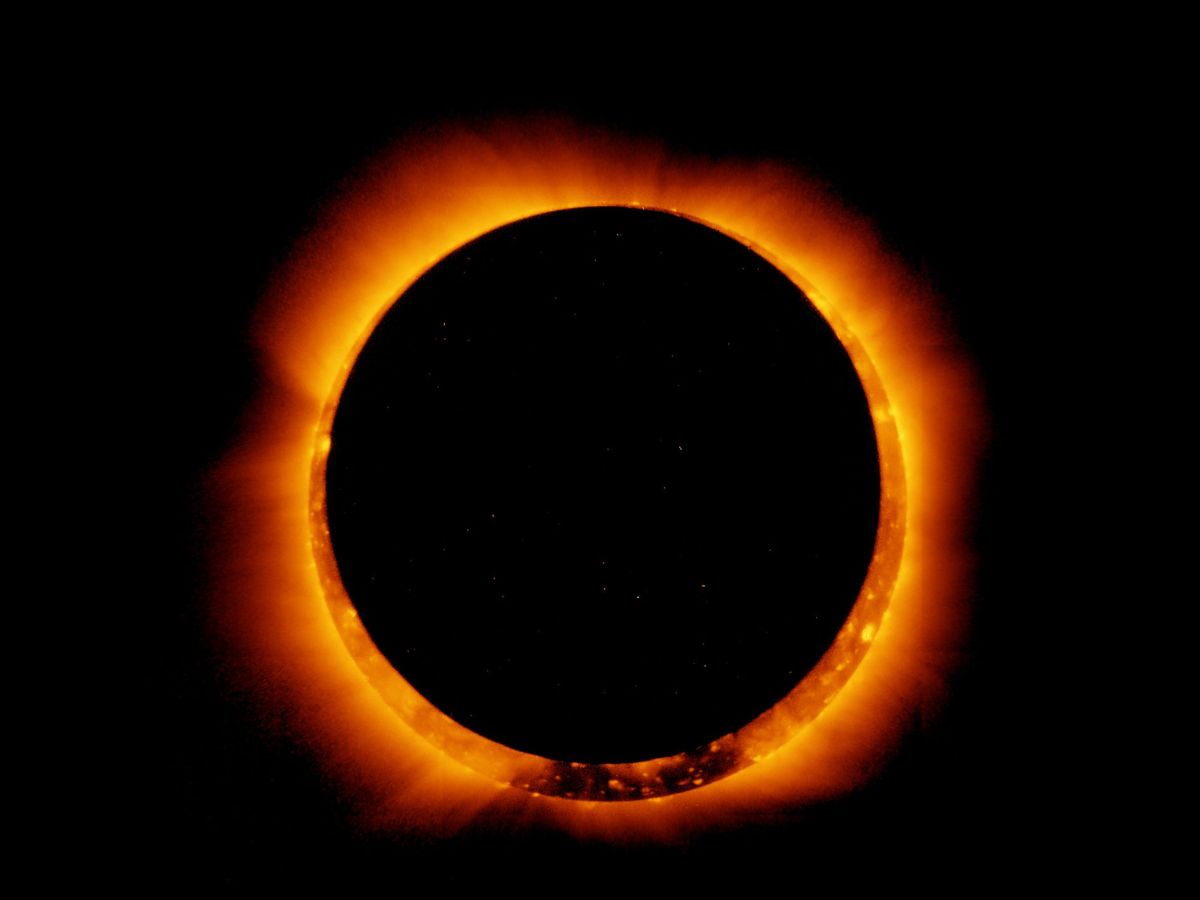
Unlike a total solar eclipse, where the Moon completely obscures the Sun, an annular eclipse occurs when the Moon is slightly farther from Earth, making it appear smaller. This creates a striking “Ring of Fire”, where the Sun’s outer edges remain visible, forming a glowing circle in the sky. The Annular Solar Eclipse 2026 promises to be a spectacle that astronomers, skywatchers, and cultural enthusiasts around the world eagerly await.
This event also underscores the perfect alignment of the Sun, Moon, and Earth, offering not just a visual treat but also an opportunity for scientific observation, photography, and public engagement with astronomy.
What is the Annular Solar Eclipse 2026?
The Annular Solar Eclipse 2026 occurs when the Moon passes directly in front of the Sun but does not completely cover it. Unlike a total solar eclipse, where daytime briefly turns into night in the path of totality, an annular eclipse leaves a thin ring of the Sun visible at the peak famously called the “Ring of Fire.”
Astronomically, this happens because the Moon’s orbit around Earth is elliptical, meaning its distance from Earth changes. During this eclipse, the Moon will be at a point where it appears smaller than the Sun in the sky. This precise alignment is rare and can only be observed from specific regions on Earth.
The eclipse is part of a series of astronomical events in 2026, including other solar and lunar eclipses. Scientists and amateur astronomers alike use such events to study solar activity, test observation instruments, and educate the public about celestial mechanics.
Date and Timings of the Solar Eclipse 2026
The Annular Solar Eclipse 2026 will occur on February 17, 2026, marking the first significant solar event of the year. According to NASA and other astronomical observatories:
- Start Time: 09:56 GMT (3:26 PM IST)
- End Time: 14:27 GMT (7:57 PM IST)
- Peak Duration: Approximately 2 minutes 20 seconds at maximum coverage
The total event spans around 3.5 hours, including the partial phases before and after the peak annular phase. Precise timings are crucial for observers planning to witness the eclipse, whether directly or via live streams.
For enthusiasts in different time zones:
- EST (New York): February 17, 4:56 AM – 9:27 AM
- CET (Europe): February 17, 10:56 AM – 3:27 PM
- IST (India): February 17, 3:26 PM – 7:57 PM
These timings help global audiences coordinate viewing and ensure safe observation using proper solar equipment.
Where Will the Eclipse Be Visible?
The full annular phase will be visible primarily from Antarctica, providing a unique opportunity for scientists stationed there and adventure-seekers with specialized expeditions.
A partial eclipse will be visible across several regions:
- Africa: Southern and eastern parts
- South America: Southern tip
- Pacific Ocean and Atlantic Ocean regions
In India, the annular phase will not be visible, but the event’s cultural significance ensures it will still be observed through rituals and prayers. For those unable to view the eclipse directly, live streams from NASA and other space agencies provide a safe alternative to experience the event in real time.
The Spectacular Ring of Fire
The most visually striking aspect of an annular solar eclipse is the “Ring of Fire” effect. At peak, the Moon covers the Sun’s center while leaving the outer edges visible, creating a glowing ring in the sky. During this event, about 96% of the Sun’s center will be obscured, creating a dazzling visual spectacle lasting around 2 minutes.
This effect has become highly popular in astrophotography, with photographers around the world capturing the annular eclipse’s brilliance. The phenomenon also serves as a reminder of the intricate precision of celestial movements, highlighting the dynamic nature of our solar system.
Cultural Significance of Surya Grahan in India
Even if the eclipse is not visible in India, Surya Grahan 2026 holds cultural and religious importance. In Hindu tradition, solar eclipses are considered significant cosmic events that influence daily life, prompting various rituals and practices:
- Sutak Kaal: A period considered inauspicious starting 12 hours before the eclipse
- Fasting and Prayers: Many devotees fast and offer prayers during the eclipse
- Temple Closures & Ritual Cleansing: Temples may close temporarily, and households perform cleansing rituals afterward
These practices are rooted in centuries-old beliefs, demonstrating how ancient cultures observed and respected celestial phenomena. Modern India continues to blend scientific awareness with these traditional customs, making eclipses both educational and culturally rich experiences.
Live Streaming and Viewing Options
For global audiences wanting to witness the Annular Solar Eclipse 2026, multiple options are available:
- NASA Live Streams: High-quality coverage with expert commentary
- Space Agencies & Universities: Often broadcast live with scientific explanations
- Social Media Platforms: Real-time updates and streaming on YouTube, Instagram, and Twitter
These platforms provide safe and convenient ways to experience the eclipse, particularly for regions where the annular phase is not directly visible.
Other Major Eclipses in 2026
The Annular Solar Eclipse 2026 is the first major eclipse of the year. Other significant eclipses in 2026 include:
- March 3, 2026 – Total Lunar Eclipse: Visible across Asia, Australia, Pacific Islands, and the Americas
- August 12, 2026 – Total Solar Eclipse: Visible in Greenland, Iceland, Spain, Russia, and parts of Portugal
- August 27–28, 2026 – Partial Lunar Eclipse: Visible in the Americas, Europe, Africa, and Western Asia
These eclipses provide multiple opportunities for enthusiasts and astronomers to witness the dynamic movements of our celestial neighbors.
Annular vs Total Solar Eclipse
Understanding the difference enhances the appreciation of this rare event:
- Total Solar Eclipse: Moon fully covers the Sun, resulting in brief darkness
- Annular Solar Eclipse: Moon covers the Sun’s center, leaving a visible ring
- Partial Solar Eclipse: Only a portion of the Sun is obscured
The Annular Solar Eclipse 2026 demonstrates the beauty of an annular eclipse, offering a different visual spectacle than total eclipses, emphasizing the variety and precision of cosmic events.
Safety Tips for Viewing Solar Eclipses
Looking directly at the Sun without protection is dangerous and can cause permanent eye damage. Safe viewing methods include:
- ISO-Certified Solar Viewing Glasses
- Solar Filters on Telescopes
- Projection Methods: Pinhole projectors or eclipse viewers
Following these precautions ensures observers can safely enjoy the event while minimizing risks.
Fun Facts About Solar Eclipses
- Eclipses occur due to precise alignment of Sun, Moon, and Earth
- The Moon’s distance from Earth determines if the eclipse is total, annular, or partial
- Historically, eclipses influenced navigation, calendars, and cultural rituals
- Modern science allows astronomers to predict eclipses centuries in advance, connecting ancient knowledge with contemporary research
The Annular Solar Eclipse 2026 exemplifies the blend of tradition, science, and natural beauty.
Conclusion
The Annular Solar Eclipse 2026 promises to be an awe-inspiring celestial event, with the Ring of Fire captivating skywatchers worldwide. Even in regions where it isn’t visible, the event holds cultural significance, connecting communities with ancient traditions.
With live streaming and global coverage, enthusiasts can safely witness this spectacular alignment, appreciate the science behind it, and marvel at the universe’s precision. Mark February 17, 2026, on your calendar to experience one of the most fascinating astronomical events of the year.
Source – NewsNarada rewrite based on verified reports from The Times of India, hindustantimes, Wikipedia
Stay connected with newsnarada.in – Messenger of Truth.