
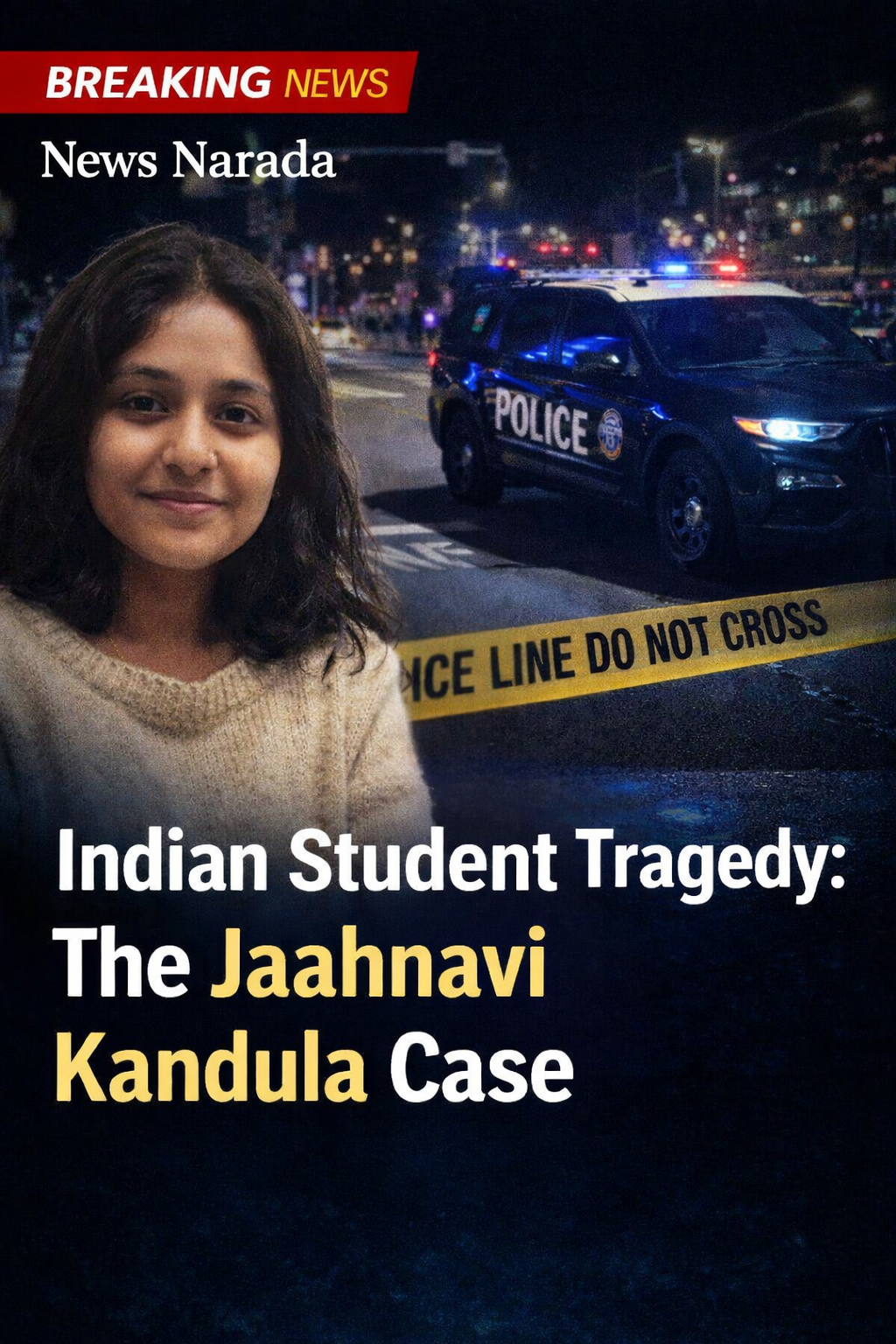
The Jaahnavi Kandula settlement has become one of the most widely discussed developments in the Indian student US police case in recent years. The tragic death of 23-year-old Jaahnavi Kandula not only devastated her family and friends but also sparked intense international debate about police accountability, emergency response driving, and the safety of international students living abroad.
Jaahnavi, an Indian student killed in the US, was pursuing her master’s degree in Seattle when her life was tragically cut short in an accident involving a police vehicle. What began as a routine emergency response call ended in a heartbreaking loss that shook communities across two nations. The case eventually resulted in a historic $32 million settlement that US police authorities agreed to provide to her family. Legal observers have described it as one of the largest US wrongful death settlements connected to a police vehicle incident in recent memory.
The Jaahnavi Kandula settlement has since become a symbol of both accountability and grief, an example of how legal systems attempt to respond to irreversible human loss.
What Happened in the Jaahnavi Kandula Case?
The Seattle police accident case dates back to 2023, when a Seattle police officer responding to an emergency call struck Jaahnavi Kandula while driving at a high speed. According to official reports, the officer was en route to assist in another situation when the collision occurred.
Jaahnavi had moved to the United States to pursue higher education, filled with aspirations and dreams for her future. On the day of the accident, she was crossing the street when the police vehicle hit her. The suddenness of the event stunned the Indian community both in the United States and in India.
As news spread, the Indian student’s US police case quickly gained widespread media attention. Reports raised questions regarding speed limits during emergency responses, use of sirens, adherence to departmental policies, and whether safety protocols were properly followed. These concerns transformed the case from a local tragedy into an international issue involving diplomatic attention and public scrutiny.
The tragic incident highlighted the vulnerability of pedestrians and brought attention to how emergency response systems operate in densely populated urban environments.
Investigation and Public Reaction
Following the accident, authorities launched a formal investigation into the Seattle police accident case. The goal was to determine whether the officer involved complied with departmental policies and traffic safety regulations during the emergency response.
Public reaction intensified when media outlets reported on body-camera footage and internal audio recordings related to the incident. Many critics questioned whether appropriate seriousness and accountability were demonstrated in internal discussions following the crash. Advocacy groups, civil rights organizations, and student communities demanded transparency throughout the investigation.
The Indian student killed in the US soon became a symbol of broader concerns regarding road safety, law enforcement conduct, and the treatment of international students. Protests and online campaigns called for accountability, urging officials to ensure justice was delivered fairly and transparently.
The Indian government reportedly monitored developments closely, reflecting the diplomatic sensitivity of the case. The tragedy resonated deeply among Indian families who send their children abroad for higher education, trusting that they will be safe while pursuing their dreams.
For Jaahnavi’s family, however, the matter was profoundly personal. While public debates focused on policy and accountability, her loved ones were grieving the unimaginable loss of a daughter whose life had barely begun.
$32 Million Settlement US Police Agreement
In a major legal development, city authorities agreed to a $32 million settlement with the US police agreement with Jaahnavi Kandula’s family. The Jaahnavi Kandula settlement represents one of the most significant US wrongful death settlements involving a police vehicle accident.
The compensation, estimated at approximately ₹262 crore, is intended to provide financial support to her family. Legal experts note that wrongful death settlements aim to address both economic and non-economic damages, including loss of companionship, emotional suffering, and future earnings potential.
While no financial agreement can restore a life, the settlement is widely viewed as an acknowledgment of responsibility in the Seattle police accident case. It also signals recognition of the profound impact the tragedy had on Jaahnavi’s family and the broader community.
Legal analysts suggest that the size of the $32 million settlement in the US police agreement may influence how future cases involving emergency vehicles are handled. Such settlements often prompt internal reviews of policies, enhanced training programs, and stricter enforcement of safety guidelines.
The Jaahnavi Kandula settlement thus carries implications beyond this single case. It reinforces the principle that even during emergency responses, public safety standards must remain paramount.
Why the Jaahnavi Kandula Settlement Matters
The Jaahnavi Kandula settlement is significant not only for its financial value but also for its broader social and legal implications.
First, it underscores the importance of police accountability during emergency responses. Officers often operate under intense pressure, but adherence to safety protocols is essential to prevent avoidable tragedies.
Second, the case highlights road safety compliance under high-pressure situations. Urban environments require careful balancing between urgency and public protection. The Seattle police accident case serves as a reminder that emergency response must never compromise civilian safety.
Third, the Indian student’s US police case emphasizes the rights and protections of international students. With thousands of students traveling abroad each year, ensuring their safety is a shared responsibility among governments, universities, and local authorities.
Fourth, the US wrongful death settlement demonstrates how civil legal systems function to address harm caused by negligence or policy failure. Although compensation cannot heal emotional wounds, it serves as a formal acknowledgment of loss.
For many observers, the $32 million settlement of the US police decision represents a measure of justice. It sends a message that institutional accountability remains critical in democratic societies.
Impact on Indian Students in the US
The Indian student killed in a US incident deeply affected thousands of Indian students studying across American universities. The United States remains one of the most popular destinations for Indian students pursuing higher education in technology, engineering, business, healthcare, and research fields.
Following the Seattle police accident case, universities and student associations began emphasizing pedestrian awareness programs, traffic safety workshops, and orientation sessions covering local laws. Some institutions also reviewed communication protocols to ensure timely assistance to international students in emergencies.
Student advocacy groups called for stronger coordination between universities and local authorities to protect international students. The Jaahnavi Kandula settlement became a reference point in discussions about institutional responsibility and safety frameworks.
Parents in India expressed concerns about road safety and law enforcement practices abroad. The tragedy served as a painful reminder that while international education offers immense opportunities, it also comes with unforeseen risks.
The Indian student US police case thus reshaped conversations around safety preparedness, diplomatic engagement, and cross-border legal cooperation.
Legal and Diplomatic Implications
The US wrongful death settlement in the Jaahnavi Kandula settlement may influence future claims involving government-operated vehicles. Large settlements often trigger comprehensive policy reviews within city administrations and police departments.
Legal experts note that emergency driving standards must balance urgency with public safety. The Seattle police accident case highlights the importance of consistent training, adherence to speed regulations, and effective oversight mechanisms.
Diplomatically, the case underscored the necessity of transparent investigations when foreign nationals are involved. Prompt communication between governments can prevent misunderstandings and maintain bilateral trust.
The Indian student’s US police case demonstrated how domestic incidents can carry international repercussions. Ensuring accountability in such cases strengthens confidence in legal institutions.
Furthermore, the settlement may serve as a precedent in evaluating compensation amounts in similar wrongful death claims. Courts and city administrations often study past settlements when determining appropriate financial agreements.
Broader Conversations on Police Reform and Road Safety
Beyond the immediate legal outcome, the Jaahnavi Kandula settlement reignited broader discussions about police reform and public safety infrastructure. Advocacy groups argue that improved emergency response training, technological monitoring of vehicle speeds, and clearer oversight systems are necessary to prevent similar tragedies.
Road safety experts emphasize that even during emergency calls, officers must weigh potential risks to pedestrians and other motorists. The Seattle police accident case demonstrates how split-second decisions can have life-altering consequences.
Community leaders have called for increased transparency in internal investigations involving law enforcement. Public trust depends on clear communication and consistent accountability standards.
The Indian student killed in the US tragedy thus became part of a larger narrative concerning ethical governance and systemic improvement.
Remembering Jaahnavi Kandula
While the legal aspects of the Jaahnavi Kandula settlement continue to be analyzed, at the heart of the story remains a young woman with aspirations, talents, and dreams. Friends described Jaahnavi as ambitious, compassionate, and dedicated to her studies.
Her journey to the United States symbolized opportunity and hope. The Seattle police accident case abruptly ended that journey, leaving behind grief that transcends borders.
Memorial gatherings and community tributes honored her life and achievements. For many students, her story became a reminder to value safety and solidarity.
The Indian student’s US police case may be discussed in courtrooms and policy debates, but for her family, it represents a permanent void that no settlement can fill.
Conclusion
The Jaahnavi Kandula settlement marks a pivotal moment in the Indian student US police case. The $32 million settlement that US police authorities agreed upon reflects legal accountability and recognition of the immense loss suffered by her family.
While the Seattle police accident case has reached a financial resolution, the memory of Jaahnavi Kandula continues to resonate deeply across communities in India and the United States. Her story serves as a powerful reminder of the importance of safety, responsibility, and justice.
For Indian students studying abroad and their families, the case remains a solemn reminder of why transparency and accountability must remain central to public institutions. The Jaahnavi Kandula settlement may provide some measure of closure, but the broader conversation about road safety, law enforcement responsibility, and protection of international students continues.
Her legacy, though born from tragedy, may help shape safer systems and stronger accountability in the years to come.
Source Credit: NewsNarada rewrite based on verified reports fromNDTV (World News)
Stay connected with newsnarada.in – Messenger of Truth.