
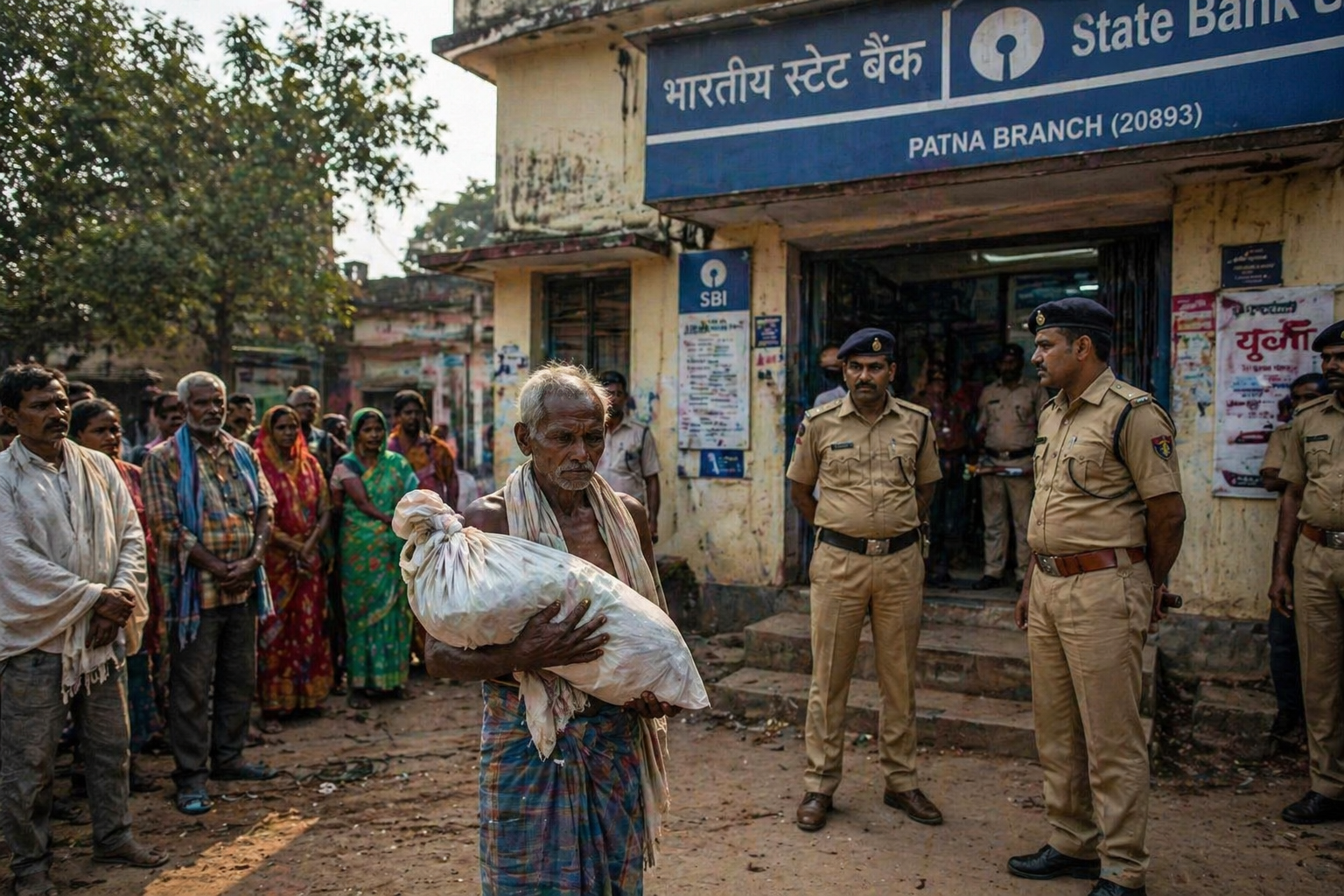
The Odisha Bank Skeleton Case has shocked the whole country. A man is said to have taken his dead sister’s bones to a bank in Odisha to get ₹20,000 from her account. The tragic and shocking event has sparked discussions about bureaucracy, rural awareness, and whether rules sometimes get in the way of being human.
The Odisha Bank Skeleton Case spread quickly across India, with people angry, sad, and in disbelief that a poor man would go to such lengths to get money that belonged to his family. Reports say that the event took place in the Keonjhar district of Odisha, where the man had supposedly gone to the bank several times before doing this.
What happened in the case of the Odisha Bank skeleton?
Reports say that the man was trying to take out between ₹19,300 and ₹20,000 from his dead sister’s bank account. He went to the branch to get the rest of the money because she had died earlier this year.
But he couldn’t finish the withdrawal process because he needed to provide documents and proof. He was angry and didn’t know how the law worked, so he is said to have dug up his sister’s body and taken it to the bank as proof of her death.
The Odisha Bank Skeleton Case is now one of the most disturbing stories about public service systems in recent years.
Where did the event happen?
The Odisha Bank Skeleton Case is said to have happened at a rural bank branch in the Patna block of Keonjhar district, Odisha. Keonjhar is known for tribal and rural communities where many residents still face challenges related to documentation, banking literacy, and access to government services.
This event has shown how far apart official procedures are from the realities of life for poorer people living in remote areas.
Why the Man Took Such a Shocking Step
Many people are asking why someone would go to such an extreme level. The answer may lie in frustration, helplessness, and lack of awareness.
In the Odisha Bank Skeleton Case, reports indicate the man did not fully understand nominee rules, legal heir certificates, or the correct process to claim the money. Without guidance, repeated rejection may have pushed him toward a desperate act.
For educated urban citizens, paperwork may feel routine. But for poor rural families, it can become a painful barrier.

The debate over banking rules and humanity begins.
The Odisha Bank Skeleton Case has triggered a nationwide discussion on whether systems should be more compassionate. While banks must follow laws to prevent fraud, critics argue that officials should also explain procedures clearly and help vulnerable people navigate the system.
Questions being raised include:
- Could staff have guided him better?
- Was there a simpler verification method?
- Should rural branches have support officers?
- Can compassionate exceptions be handled faster?
Many believe both rules and humanity must work together.
What People Are Saying on Social Media
The Odisha Bank Skeleton Case spread quickly online, and many people reacted strongly. People on social media called the story heartbreaking, shameful, and a lack of empathy.
People often reacted in these ways:
- “This should never happen.”
- “Systems failed this family.”
- “Rules without compassion are dangerous.”
- “Rural people need better help.”
The story resonated deeply because it reflected how poverty and bureaucracy can collide.
Police and local leaders respond
After the bodies were taken to the bank, police reportedly got involved, and officials later promised to help the man get the money through the right channels. Later, the remains were buried again.
The Odisha Bank Skeleton Case may now make people pay more attention to how rural banks deal with these kinds of claims.
What This Event Shows About Rural India
The Odisha Bank Skeleton Case isn’t just about one person or one bank. It also shows bigger problems:
- Low banking literacy
- Lack of document awareness
- Difficulty accessing certificates
- Poor communication in institutions
- Limited assistance for tribal and rural citizens
Many people still struggle with paperwork that others take for granted.
Why it’s important to know about banking
Digital banking and financial inclusion have grown quickly in India, but not everyone knows about them. The Odisha Bank Skeleton Case shows that opening accounts is just the beginning. People also need to know:
- Nominee registration
- Death claim process
- Legal heir documentation
- Withdrawal rights
- Whom to contact for help
Without this knowledge, even small savings can become inaccessible.
Is there a way to avoid this?
Yes, a lot of people think that a simple intervention could have stopped the Odisha Bank Skeleton Case from happening.
Some possible solutions are:
- Clear explanation in local language
- Help desk support in villages
- Outreach camps for nominee awareness
- Faster death-claim guidance
- Staff sensitivity training
Sometimes a few minutes of support can prevent a tragedy of dignity.
Why This Story Spread So Quickly
The Odisha Bank Skeleton Case went viral because it has a lot of emotion, injustice, poverty, and shocking pictures. It shows a painful truth: when people feel like no one is listening, they might do things that are hard to imagine to be seen.
That’s why the story moved millions of people in India.
Things banks and public institutions should learn
The Odisha Bank Skeleton Case teaches institutions some important things:
- Not only should rules be followed, but they should also be explained.
- People who are weak need help from others.
- Communication systems in rural areas need to get better.
- It should be easier to get help with documentation.
- Empathy helps people trust institutions.
It’s important to be efficient, but it’s also important to have dignity.
The Final Decision
The Odisha Bank Skeleton Case is more than just a shocking story. It reminds us that red tape without compassion can hurt regular people very badly. A man who wanted to get to his late sister’s small savings should never have felt like he had to carry her remains to prove his point.
As India moves into the modern age, systems need to get not only smarter but also nicer.
Source: News reports including Deccan Herald and other media coverage on the Odisha bank skeleton case.