
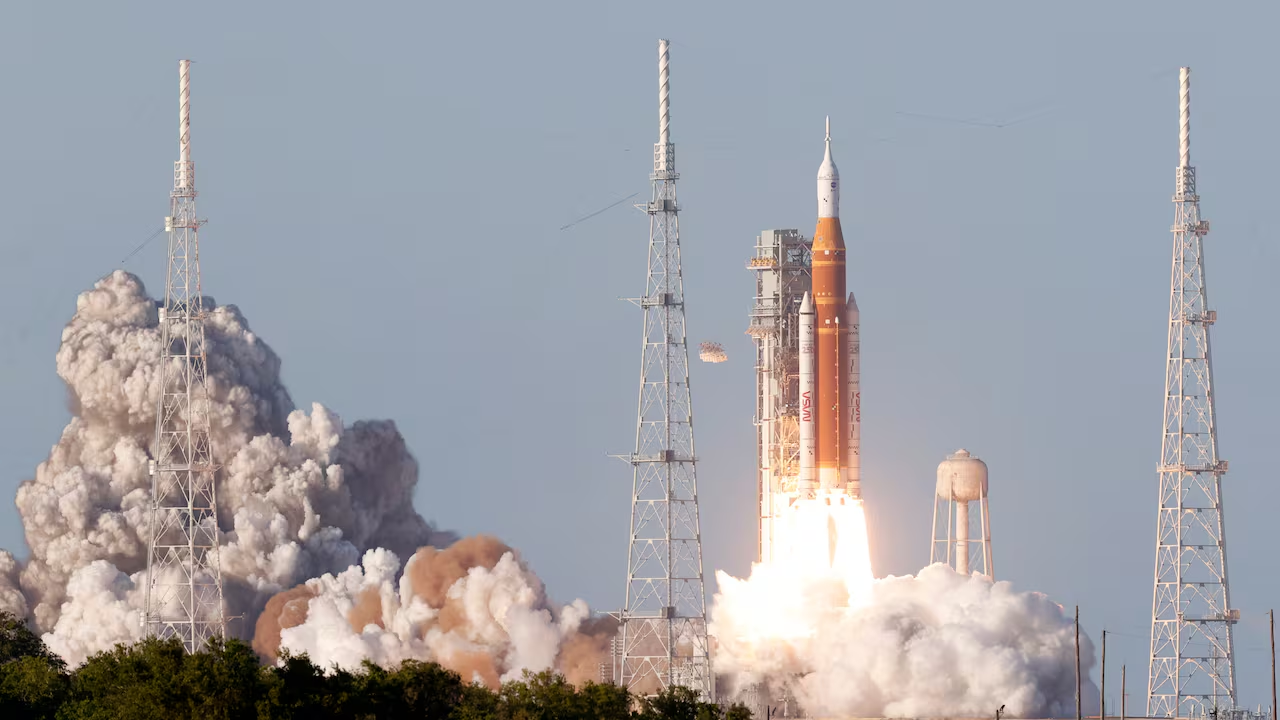
The NASA Artemis rocket is one of the most exciting space developments of our time. NASA is finally sending people back to the Moon after decades of waiting since the Apollo missions. This time, the goal is bigger: to stay there and eventually go to Mars.
If you’ve been seeing updates about the NASA Artemis rocket in the news and wondering what it really means, don’t worry. This guide breaks everything down in a way that is easy for people to understand, with real-life examples, helpful tips, and the most up-to-date information from 2026.
What Is the NASA Artemis Rocket?
The NASA Artemis rocket is part of NASA’s Artemis program, designed to send humans back to the Moon. The powerful Space Launch System (SLS) rocket, which carries astronauts in the Orion spacecraft, is at the heart of this mission.
Think of it like this:
- Rocket (SLS) = The engine that lifts everything into space
- Orion spacecraft = The “home” where astronauts live during the mission
The NASA Artemis rocket is far more advanced than older rockets, capable of traveling farther and carrying more advanced technology.
NASA Artemis Rocket 2026: A Historic Moment
In 2026, something historic happened: the launch of Artemis II.
For the first time in more than 50 years, the NASA Artemis rocket successfully sent astronauts to the Moon.
Key highlights from 2026:
- First crewed Moon mission since 1972
- Four astronauts onboard
- Around 10-day journey around the Moon
- No landing yet—this is a test mission
This mission is a huge step forward. NASA is testing systems before actually landing humans again.
How the NASA Artemis Rocket Works (Simple Explanation)
Let’s break down how the NASA Artemis rocket actually works in real life.
Step-by-step journey:
- Launch from Earth
The rocket lifts off with massive thrust. - Orbit around Earth
The spacecraft stabilizes before heading further. - Translunar injection
This is when the spacecraft moves toward the Moon. - Moon flyby
Astronauts travel around the Moon without landing. - Return to Earth
The capsule re-enters Earth’s atmosphere at high speed.
This entire process takes about 10 days, showing how complex space travel is.
Why NASA Artemis Rocket Matters in 2026
You might be wondering, “Why is this so important now?”
Here’s why the NASA Artemis rocket matters:
1. Humans are going back to the Moon
After more than 50 years, humans are finally returning to deep space exploration.
2. Preparing for future moon landings
This mission is a test for future landings planned later in the decade.
3. Step toward Mars
NASA’s long-term goal is Mars, and the Moon is the training ground.
4. New records in space travel
Astronauts are traveling farther than previous missions.
Real-Life Example: Why This Mission Feels Personal
Picture getting into a small camper-sized capsule and traveling more than 250,000 miles away from Earth.That’s exactly what astronauts on the NASA Artemis rocket are doing.
Inside:
- Limited space
- No gravity comfort
- Constant monitoring
It’s not a luxury trip; it’s a serious test of human endurance and technology.
NASA Artemis Rocket vs Apollo Missions
Let’s compare the NASA Artemis rocket with older Apollo missions:
| Feature | Apollo Missions | Artemis Program |
| Technology | Basic computers | Advanced AI & systems |
| Goal | Land on Moon | Stay + build base |
| Duration | Short missions | Long-term planning |
| Future | Ended in 1972 | Expanding to Mars |
The NASA Artemis rocket is not just repeating history; it’s upgrading it.
What’s Next After Artemis II?
The NASA Artemis rocket is part of a bigger plan.
Upcoming missions:
- Artemis III (planned)
Expected to test landing systems - Artemis IV (around 2028)
Aiming for Moon landing and base setup - Future missions
Long-term Moon presence and Mars missions
NASA is thinking long-term, not just one mission.
Challenges Faced by NASA Artemis Rocket
The NASA Artemis rocket journey hasn’t been easy, even though it’s been exciting.
Major challenges:
- Technical issues like fuel leaks
- Delays in launch schedules
- High costs (billions of dollars)
- Complex international coordination
For example, earlier delays happened due to rocket system issues before the 2026 launch.
But overcoming these challenges is part of space exploration.
Useful Tips: What We Can Learn from NASA Rockets
What can we learn from something as big as the NASA rocket?
Here are some practical takeaways:
Big goals need patience
NASA took years to reach this stage.
Lesson: Long-term planning matters.
Testing is important
Artemis II is just a test, not the final mission.
Lesson: Always test before launching something big.
Failure is part of success
Delays and technical problems didn’t stop NASA.
Lesson: Keep improving, even after setbacks.
Teamwork makes the difference
This mission involves international astronauts and engineers.
Lesson: Collaboration leads to bigger achievements.
NASA Artemis Rocket and the Future of Space
The NASA Artemis rocket is more than just a way to get to the Moon; it’s also a way to build the future.
What we can expect:
- Permanent Moon base
- Space tourism growth
- Better technology for Earth
- Human missions to Mars
In simple terms, this is just the beginning.
Latest News and Public Reactions
The launch of the Artemis rocket got a lot of attention around the world.
- Thousands of people watched the launch live
- Some viewers even criticized camera coverage
- Social media exploded with reactions
Despite minor issues, the mission itself is progressing successfully.
Why NASA Rockets Are a Big Deal
The Artemis rocket marks a new era in human history.
It’s about:
- Exploring beyond Earth
- Testing human limits
- Building a future in space
And most importantly, it shows that even after decades, humanity still dreams of going further.
The Artemis rocket will probably be one of the most important projects that will shape our future after 2026.
Source: Adapted from reporting by BBC News and latest updates on the NASA Artemis rocket mission (2026).